Chapter 01 of 12 · c. 10,000 BCE–750 CE
Before the Viking Age
Roots in the north
The people who became known as Vikings did not appear suddenly in 793. Their world grew from thousands of years of settlement, farming, travel and political competition in northern Europe. The familiar ships and silver belong to a much longer story.
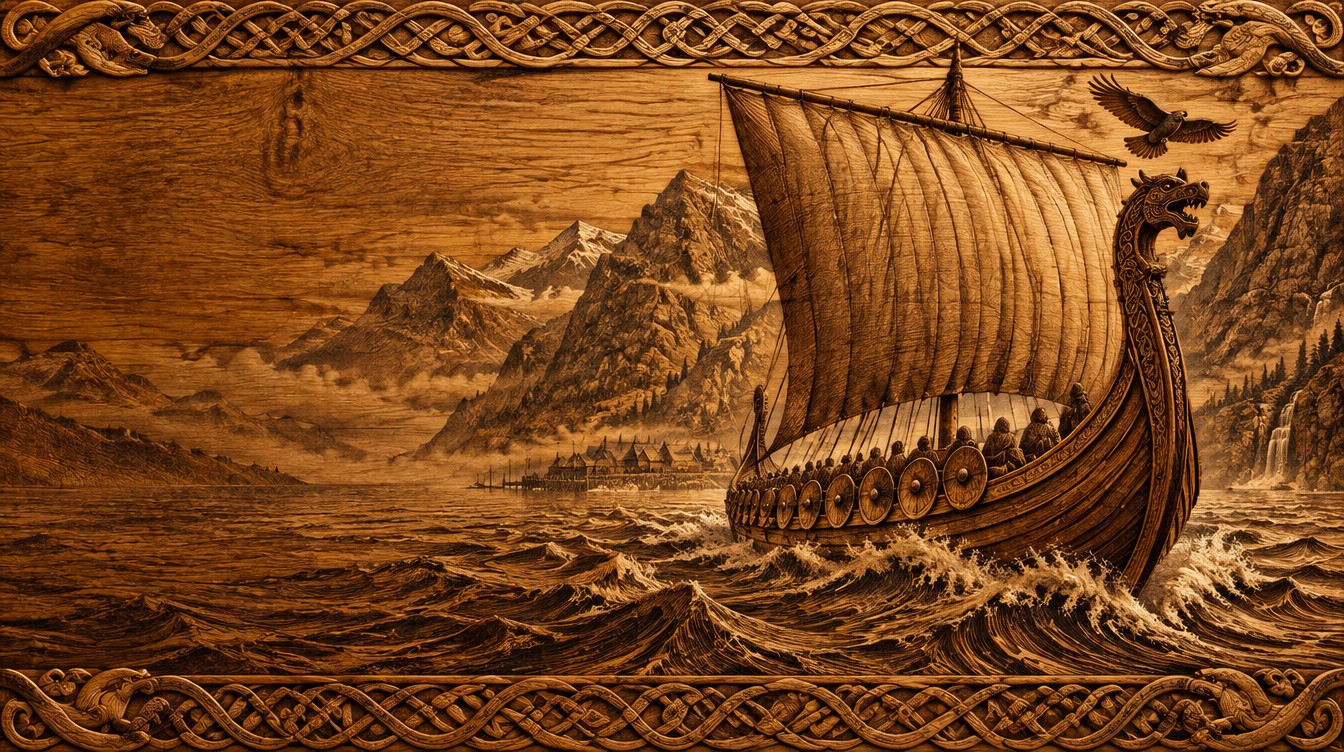
1A landscape becomes a homeland
As the ice retreated, communities of hunters, fishers and gatherers moved into newly accessible northern landscapes. Farming later changed how many people lived, while fishing and hunting remained important.
Denmark’s fertile lowlands, Norway’s long coast and Sweden’s forests and lakes offered different opportunities. Seas and waterways joined these regions as well as separating them.
This was never an empty or isolated north: people, techniques and objects moved through it long before the Viking Age. Norse-speaking communities also shared northern lands and trading relationships with Sámi peoples, whose histories cannot simply be absorbed into a Viking narrative.
2Halls, wealth and authority
During the Bronze and Iron Ages, imported objects and local craftsmanship helped powerful households display their standing. A chief needed supporters, and supporters expected protection, hospitality and rewards.
At Gudme on the Danish island of Funen, a wealthy settlement flourished between the third and seventh centuries CE. A great farm, neighbouring farms and a coastal trading place reveal an organised landscape of production and power.
Such centres show that elite halls, long-distance exchange and unequal access to resources were already established before the better-known overseas expeditions.
3Where an age begins
Historians use ‘Viking Age’ as a convenient label, usually for the late eighth to eleventh centuries. Its boundaries vary between countries and questions.
A raid recorded in an English chronicle is a useful marker for England, but cannot announce the beginning of every Scandinavian change. Archaeology traces developments in settlements, burials, ships and craft production across much longer spans.
‘Viking’ is also an imperfect name for an entire population: the word is closely associated with raiding and seaborne expeditions. A farmer who never sailed abroad still belonged to the same changing society.
Reading the period well means keeping both the dramatic voyage and the ordinary farm in view.