Chapter 09 of 12 · c. 800–1000
Gods, law and spoken memory
Order in the world
Viking Age communities made sense of life through inherited customs, stories, ritual and law. These were not separate compartments. Authority within a household, a leader’s generosity and relations with divine powers could all help uphold a social order.
1Belief as practice
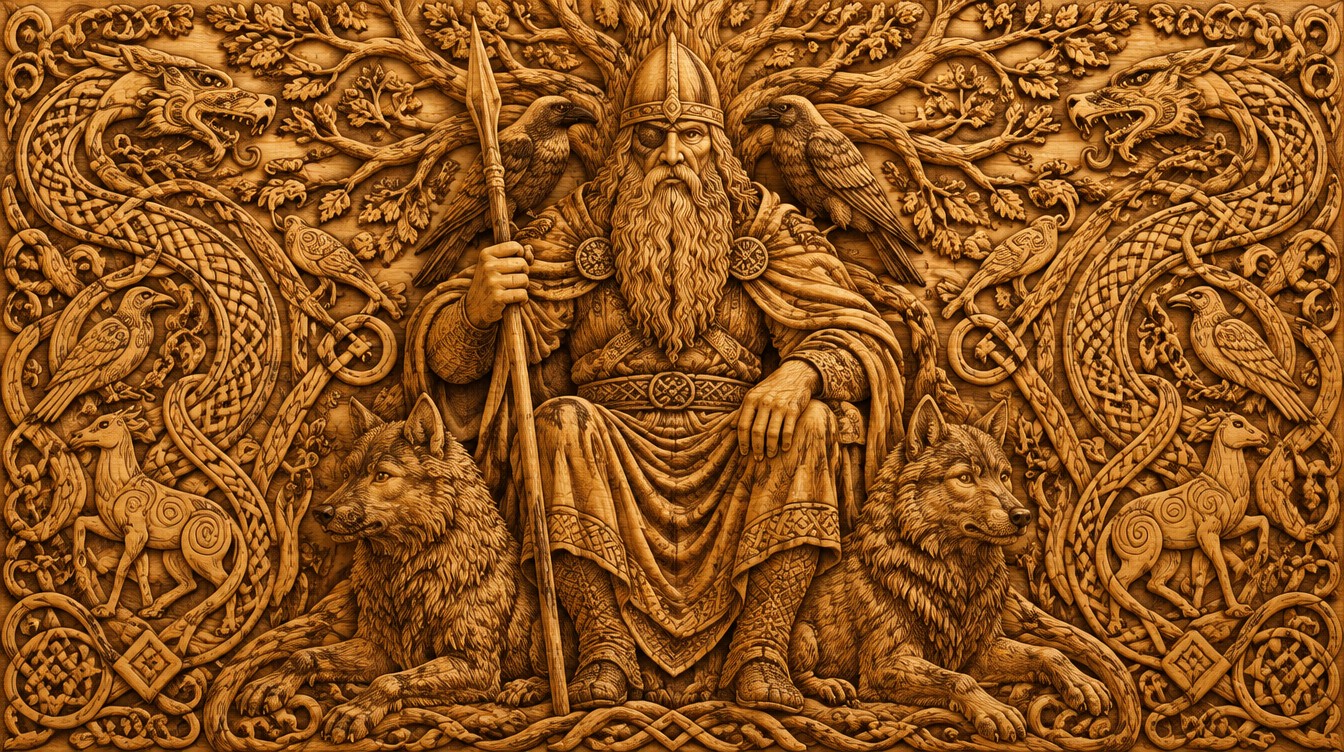
Pre-Christian Scandinavian religion had no single surviving sacred book or central institution defining belief everywhere. Rituals and local traditions mattered alongside stories about gods such as Óðinn, Þórr, Freyr and Freyja.
People might seek protection, prosperity or success through offerings and ceremonies. Death was treated in varied ways: cremation, furnished burial and other practices appear across the region.
A ship burial was spectacular and costly, not a universal funeral. Archaeology can reveal actions and selected objects more readily than private convictions.
A hammer pendant or a distinctive grave provides a clue, rather than a complete statement of faith.
2Assembly and obligation
The thing, or assembly, offered a place for legal and political business among free people. Rights to speak and influence were unequal, and the exact arrangements varied.
Kinship, friendship, reputation and compensation helped manage disputes, while conflict could escape agreed limits. Kings and chieftains also depended on followers whose service required reward.
A hall feast was consequently more than entertainment: hospitality could express rank and strengthen obligations. Later law codes and sagas are indispensable for reconstructing this world, but laws recorded in Christian medieval societies cannot all be transferred unchanged into earlier centuries.
3The distance between a voice and a book
Runic inscriptions, poetry, foreign accounts, archaeology and later manuscripts preserve different kinds of evidence. Runestones often commemorate particular people and relationships; they rarely offer a neutral survey of society.
Christian observers and Arabic travellers wrote for their own audiences, sometimes interpreting unfamiliar customs through their own expectations. The Eddas and sagas preserve a magnificent literary inheritance, but many surviving texts were written down after conversion.
A myth may contain old material while also reflecting later selection and reshaping. Rather than asking one source to speak for every person, historians compare where accounts meet, where they differ and what the material record can support.